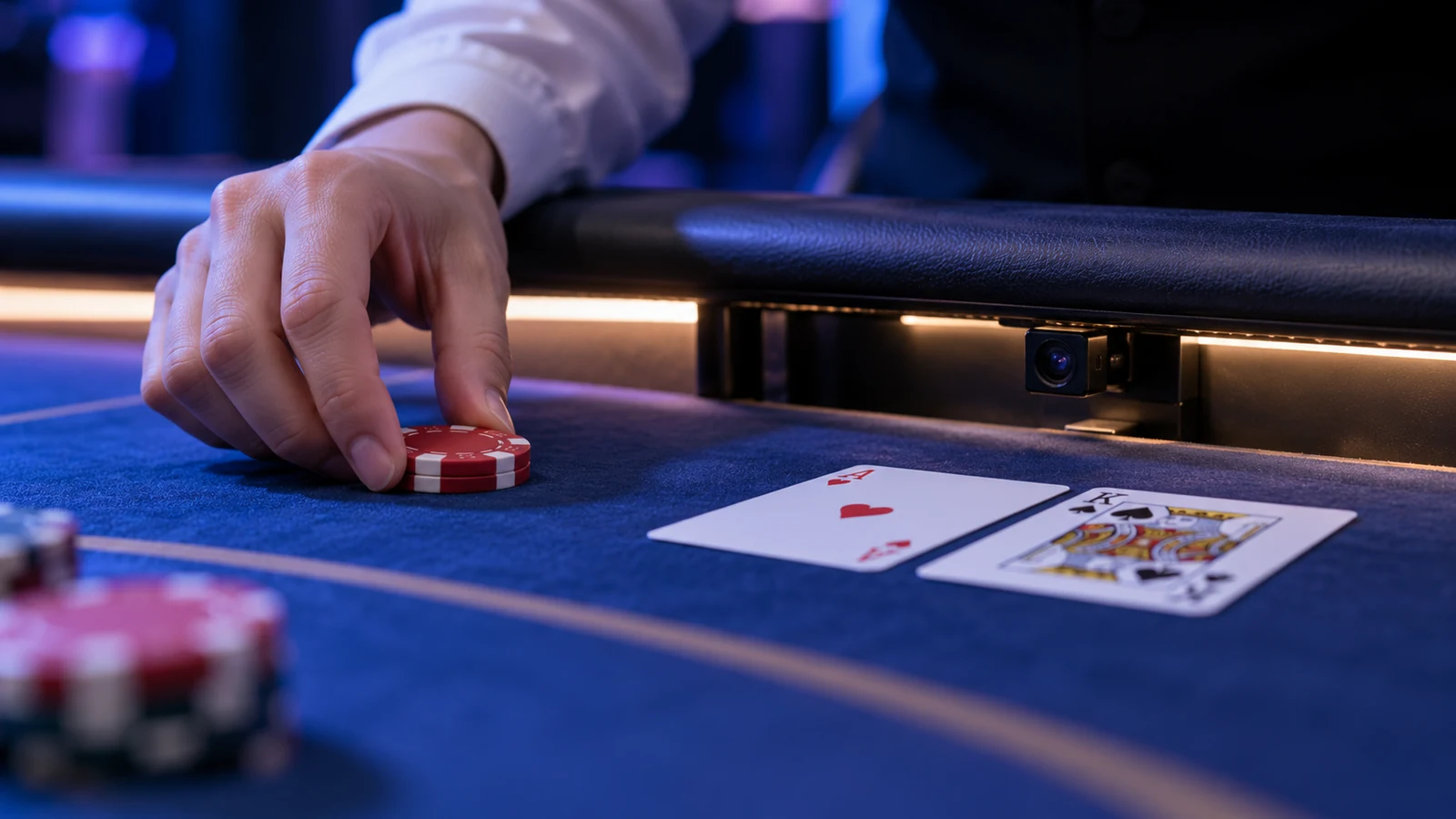
Recognition is a chain of small decisions
A card may be read correctly yet attached to the wrong seat; chip totals can also mislead when one denomination is hidden below another stack. Start reliable recognition with the camera, table layout and game procedure, then trace every image decision to an event record a reviewer can verify.
For each observation, expose the camera ID, frame time, table area, object type, candidate value, confidence and game-state phase. Retain an approved still or short evidence clip when the purpose permits. A label such as “ace” or “$100 chip” alone cannot show uncertainty, occlusion or the rule that accepted it.
Recognition depends on deck design, camera angle, lighting and table layout. A controlled setup may be clear; live play adds glare, hands, motion blur, layout changes and video compression. One accuracy figure cannot cover every lens, deck or broadcast. Verify each deployment under the conditions it will actually face.
Design the capture geometry before training a model
Every later stage depends on the pixels delivered by camera placement. A steep view compresses card corners, a wide lens bends lines, reflections wash out printing, and a dealer's hand may cover the index. Calibration maps table positions into the image. A change in zoom, focus or camera position can invalidate it without a software update.
Assign fixed table regions for the deck, discard area, community cards, player seats, betting zones and dealer space. Check calibration at startup and after maintenance. Detect changes to the camera pose or table layout, then pause automated reading until recalibrated. Silent drift produces plausible coordinates that are no longer trustworthy.
Warping a card's corner quadrilateral into a standard view can help classify its face, but only if the corners are correct. Overlap, occlusion and cards partly outside the frame weaken that transform. Keep the source image and avoid crops that remove the rank or suit needed for verification.
Card pipelines: detection, normalisation and reading
- Find candidate rectangles:Use edges, learned object detection or a table-specific region proposal to locate cards.
- Estimate orientation:Detect corners or printed features and normalise rotation and perspective.
- Read the index:Classify rank and suit from the visible area while retaining alternative labels where confidence is close.
- Associate the card:Connect the object to a dealer, board or player zone using stable table coordinates.
- Check the sequence:Compare the card with the current deal phase and allowed game actions.
- Resolve uncertainty:Ask for an operator check or repeat the read after a controlled camera view.
Decks vary in typeface, corner shape, colour, suit marks and backs. Include every approved design in evaluation. A model familiar with one deck may confuse a similar suit glyph on another. Read rank and suit as separate evidence, then check whether that pair exists in the configured deck.
A visual match is not yet an accepted game fact. The camera may see a card before the server accepts its deal event. Store the observation separately from the game event, link their IDs and reconcile them under an explicit rule.
Chip counting has geometry and denomination problems
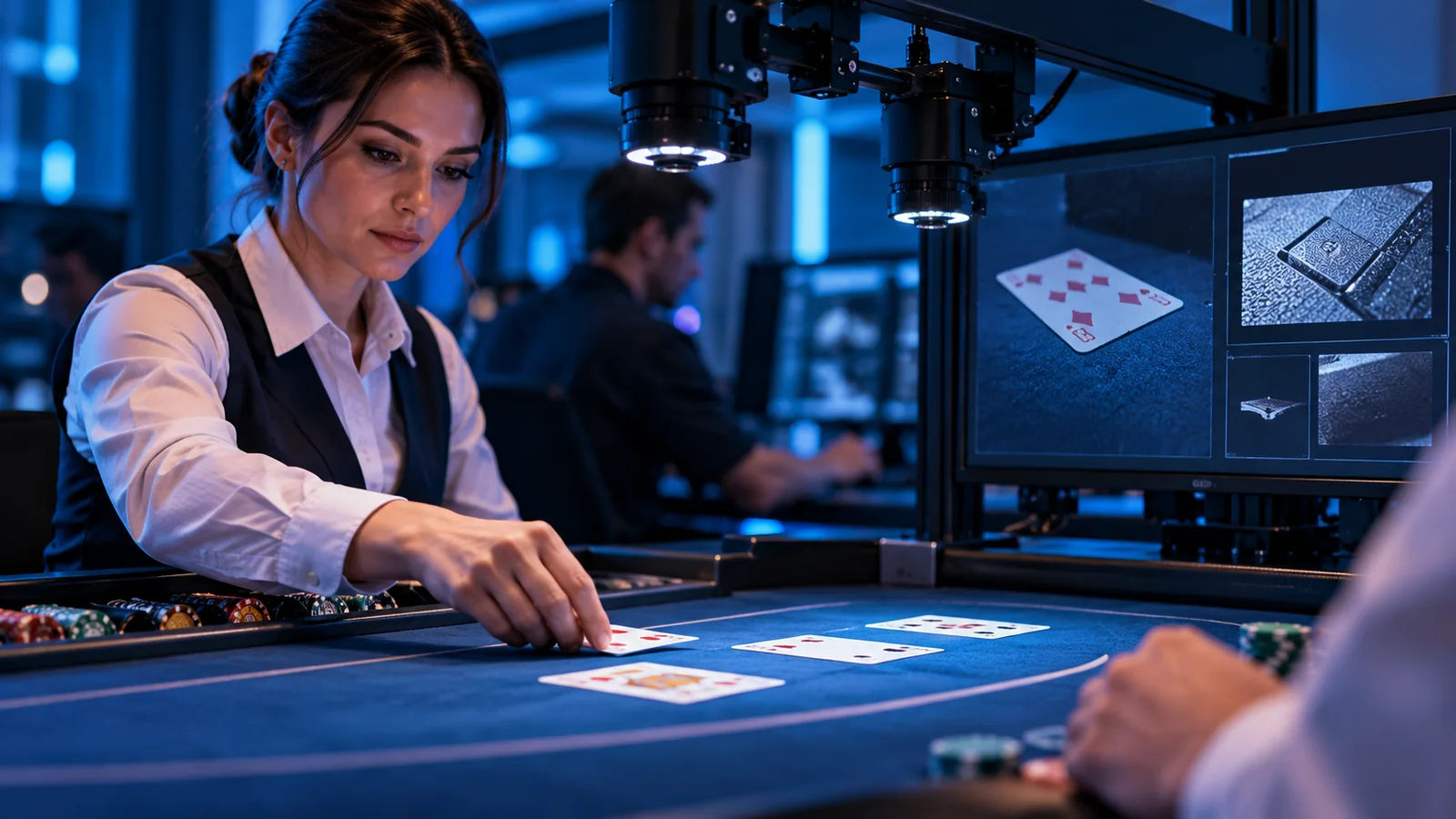
Chip stacks can be read from visible edges, surface marks, height or an overhead image, and each view loses something. A top-down camera shows the upper chip but not the stack count; a side view shows layers but may miss edge marks; tilt alters spacing. Similar chip colours and shifting light add ambiguity.
Use printed patterns, denomination marks or another controlled identifier instead of colour alone. Restrict the model to chip designs authorised for that table and identify the set before assigning values. Count across several frames, then compare the estimate with the betting zone and known transaction state.
| Condition | Recognition risk | Control |
|---|---|---|
| Mixed stack | One denomination is hidden by another chip. | Inspect side and top views; retain a human confirmation path. |
| Glare or worn print | Colour and denomination marks lose contrast. | Use controlled lighting and test worn tokens, not only new samples. |
| Chip partly covered | Stack height or edge count is incomplete. | Mark the count as uncertain until a clear view or reconciliation event. |
| Table change | Old colour-to-value mapping persists after a new chip set is installed. | Version the table configuration and require a pre-session verification. |
| Hand crosses the stack | Tracking loses object identity or counts a duplicate. | Use temporal association and wait for a stable post-action frame. |
Use confidence for routing, not as a substitute for judgment
Confidence can route an observation for acceptance, another frame or human review. It is not a calibrated probability unless calibration has been tested on representative data. Set separate thresholds for reading cards, estimating chips and assigning table zones. Their error costs differ, so one threshold should not govern every event.
Break false positives and missed detections out by condition: confusing ranks or suits, hand coverage, low-contrast tables and other causes. Evaluate on sessions and cameras absent from training. If identical images appear in both sets, apparent performance on unseen play will be inflated.
When staff correct an output, retain the initial value and correction as separate records. Add a reason such as glare, occlusion, unusual orientation, an unlisted deck or table setup. Corrections can inform retraining while preserving the history needed to review an earlier round.
Connect visual records to game rules
Expose a narrow event record for recognition: object ID, candidate rank and suit, table zone, confidence, frame time and evidence pointer. The game service can compare it with the expected dealing phase and official event. Disagreement should pause settlement or send the round for review under published rules.
The 2026 minimum standards leave rule-compliant and acceptably random outcomes with the game service. Treat what the camera reads as evidence about the physical table, not as permission to alter a digital result. Link any manual correction to the first observation, operator, time and reason.
For live-dealer products, align audio, video and game-event clocks to a shared time source. Encoding delay can make a card appear after its deal has been logged. If decisions use video alone, document that delay in operating rules and design instead of assuming every frame is synchronous.
Test with the deck, table and stream that will be used
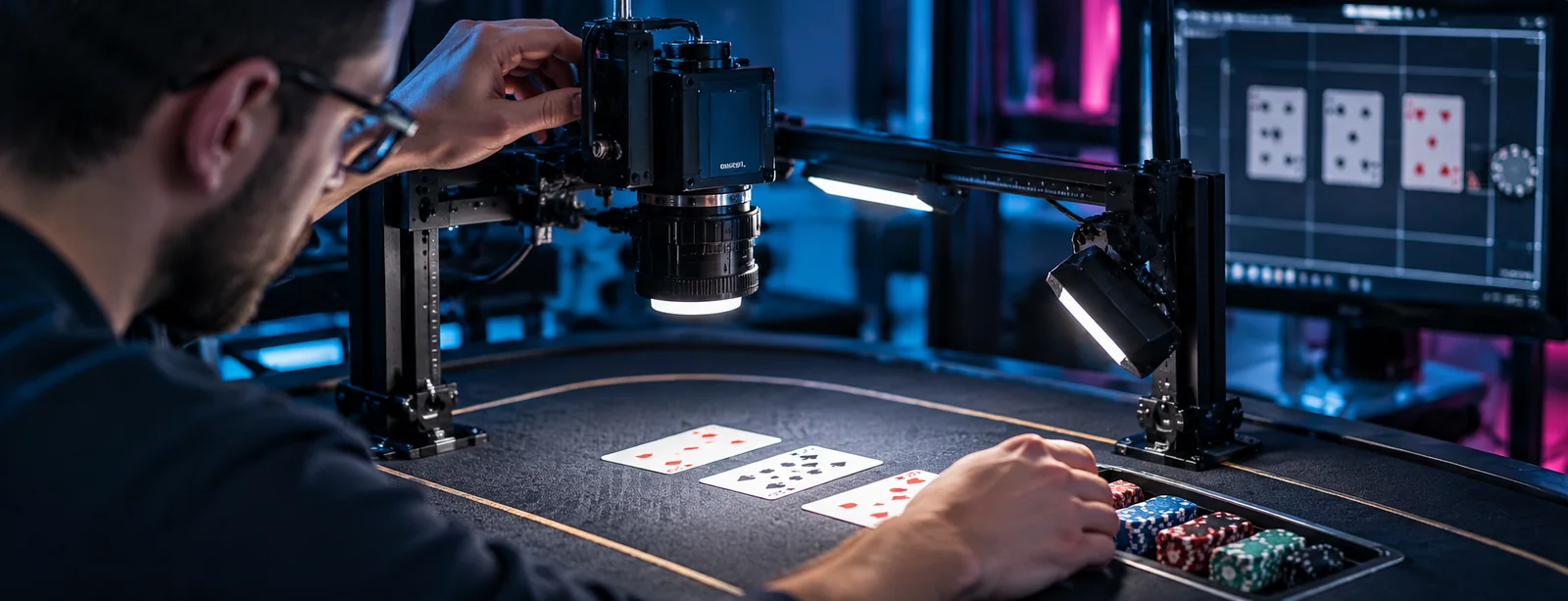
Build the evaluation matrix from operating variation: approved decks and chips, tables, cameras, light, dealer height, sleeves or gloves, hand positions, codec, frame rate and network. Include absent cards, overlaps, partly visible corners, moved stacks and brief focus loss. Clean, centred objects alone do not represent live conditions.
- Measure rank, suit, chip count, denomination and table-zone errors separately.
- Record the delay from first visible frame to accepted or reviewed event.
- Track the model-correction rate and what evidence supports the correction.
- Repeat evaluation after camera service, deck artwork or table layout changes.
- Keep a target guardrail for incorrect settlement and unresolved round events.
Video may include players and dealers. Do not gather identity signals unless a separately assessed purpose requires them. The New Zealand Privacy Commissioner's biometric code covers automated processing to verify, identify or categorise people. Card and chip recognition serves a different purpose, although identifiable footage may still be subject to general privacy duties.
Where the method reaches its limit
Recognition fails when the image lacks decision-critical detail. A hidden suit mark cannot be restored with certainty; a stack obscured by a hand remains uncountable. A model can rank plausible answers, but that does not verify them. Return an unresolved observation and a review step when evidence is missing.
Before resolving a card mismatch, attach the source frame, calibration version, assigned seat and round ID to the case. If any element cannot be recovered, leave the event unresolved and follow the documented staff procedure.