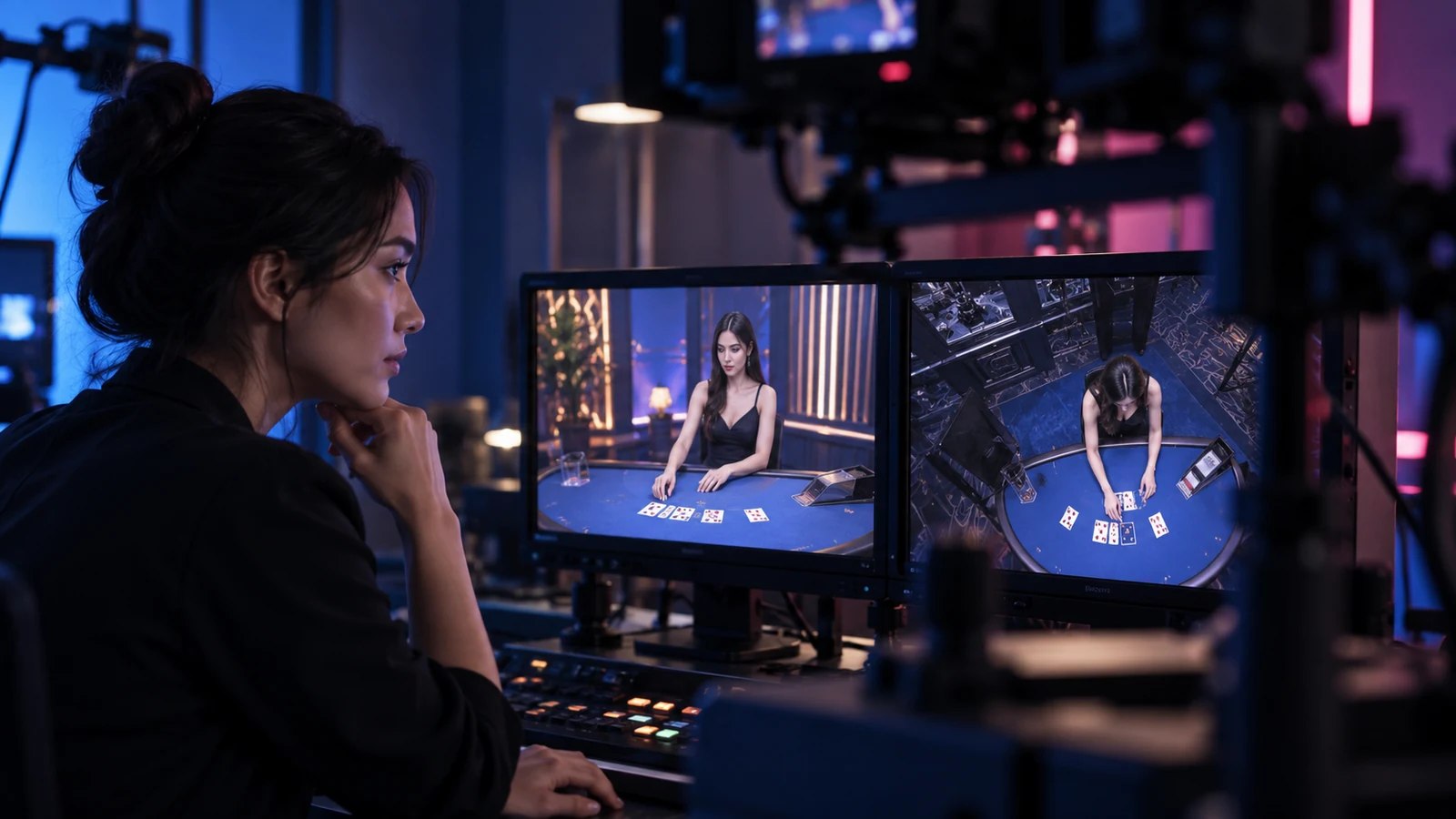
Live casino vision is part of an audiovisual system
A studio may have excellent cameras yet miss the key moment if a feed freezes during a deal or its clock drifts from the game service. Vision is useful only when an alert is timely, points to reviewable evidence and distinguishes a production fault from a game event. Synchronisation and staff workflow matter as much as the recognition model.
Map the table process from opening through result, then identify where images add evidence unavailable elsewhere. Do not install cameras merely because a model can process video. Each one brings setup, upkeep, privacy and security costs; a second camera helps only if it independently shows the event in question.
Physical dealer actions and platform records are connected, but they are not the same record. The service remains authoritative for outcomes and account transactions. Video can support review, yet cannot by itself validate a bet, show that a player saw a notice or replace an auditable game log.
Choose camera views from the event map
Choose the camera view from the objects and boundaries the task must inspect. A wide room shot may reveal people but miss card symbols; an overhead view shows cards and betting zones but hides stack height; a side view exposes layers while a hand can cover a card corner. Use an event map and test image to guide placement, not broadcast appearance.
| View | Useful evidence | Common blind spot |
|---|---|---|
| Overhead table camera | Card positions, chip zones and movement across marked regions. | Hand occlusion and limited depth information. |
| Dealer-facing camera | Workstation context and visible equipment state. | Small game objects and fine card details. |
| Side table camera | Chip height, physical stack movement and table-edge boundaries. | Objects hidden behind other stacks or the dealer's hands. |
| Stream output monitor | Frozen, missing or low-quality broadcast frames. | Cannot see a table event that the camera did not capture. |
Map image coordinates to marked table regions and version the calibration. After cleaning, repair or replacement, do not keep sending coordinates based on old geometry. Check the view at session start and whenever the layout changes.
Monitor the broadcast path as well as the table
A dealer may follow procedure while a customer sees frozen or delayed video. Monitor camera health, encoder output, transport delay, frame loss and player playback as separate stages. Show timestamps in the operator view so reviewers can match source frames to game events. Do not prompt a customer to act on stale state.
Align clocks for video, audio and game events. A small offset can reverse how a sequence appears: a card may seem to arrive before the dealer reaches the shoe, or the betting-close overlay may follow the physical signal. Record clock source, sync status and expected delay, with an alert threshold tied to the procedure.
If the stream cannot support reliable monitoring, make degraded mode visible. The table may continue under an approved alternate process if rules allow, but the vision service should stop asserting uncertain state. Tie a “live” badge to stream health, not to an animated video player.
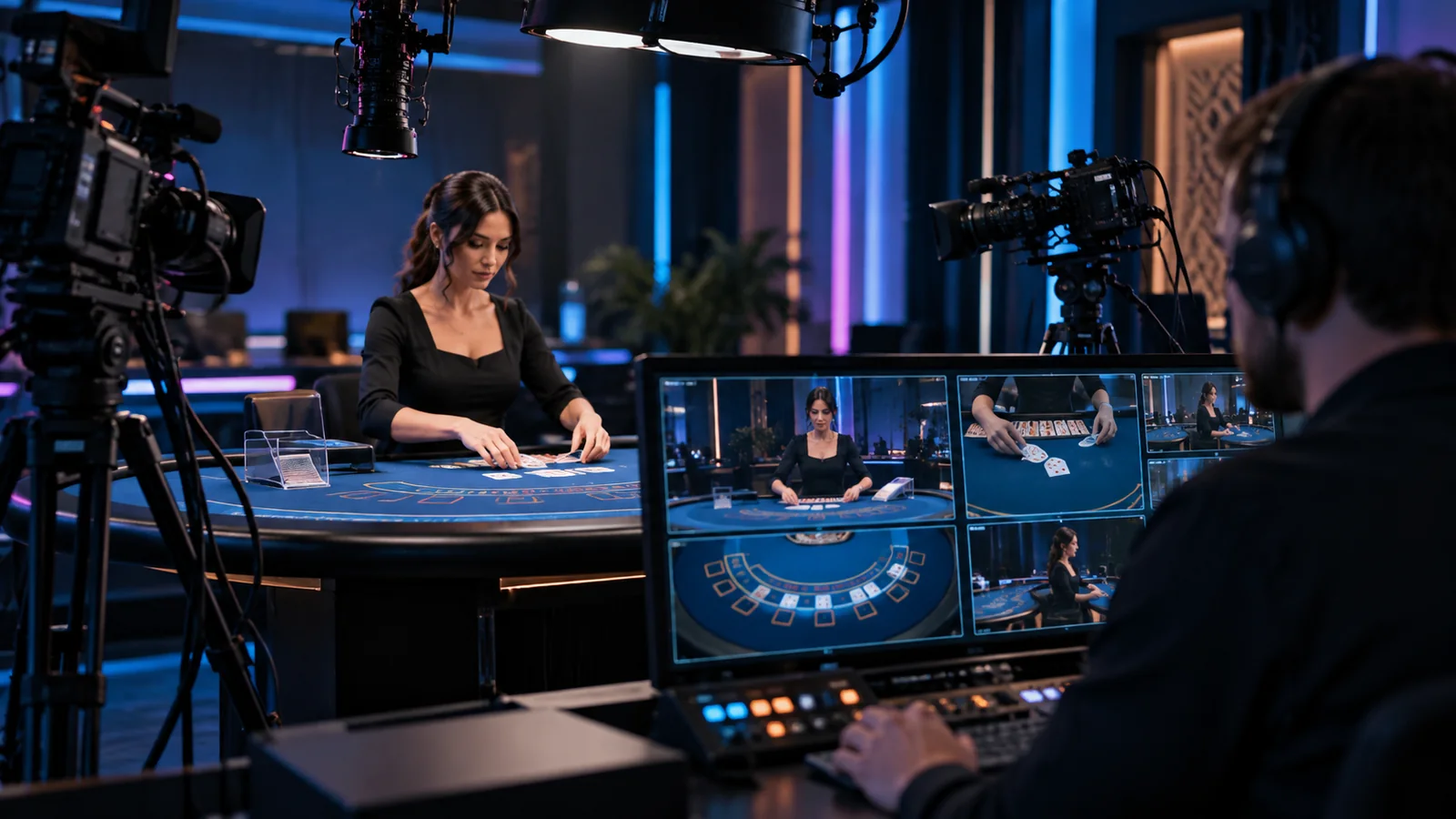
Build a human review path around evidence
Give alerts enough context for a supervisor to review: event time, camera, crop, model output, confidence, expected phase, stream status and preceding alert. Include a route to the approved source frame or clip. “Possible irregularity” without evidence adds work but gives no direction.
An anomaly score is not an accusation. A hand near chips may be routine, and a missing card may reflect dealer action or blocked vision. Describe the observation and let a person compare it with procedure. For customer-impacting decisions, record reviewer, evidence, policy and resolution; make corrections auditable instead of rewriting the past.
- Define alert classes by operational consequence and assign a response owner to each one.
- Prevent the same persistent condition from generating an endless series of duplicate alerts.
- Keep model and camera health in view when an event is reviewed.
- Separate stream technical alerts from conduct or game-integrity assessments.
- Retain only the evidence required by a documented security, regulatory or review purpose.
Staff privacy needs its own controls
Dealers and studio staff are people captured by the system, not merely model features. Explain recorded areas, viewer roles, routine retention and protections for incident clips. Do not reuse analytics for unrelated staff-performance reviews without a defined purpose and appropriate assessment. Camera placement should exclude private staff spaces and limit unnecessary capture.
A table-monitoring camera may still capture identifiable workers and customers. Restrict replay access, log each review's purpose and keep face matching or age estimation out of the pipeline unless separately assessed. Notices and studio layout should describe the system's actual use.
Log staff access, encrypt stored clips and isolate studio systems from office networks. If an overseas vendor processes footage, document the transfer and access controls. The Privacy Commissioner's guidance says the code is enforceable for in-scope biometric processing and advises organisations to understand their use before deployment.
Connect vision to game integrity without giving it outcome authority
New Zealand's online casino standards require games to follow their rules, produce acceptably random outcomes where relevant and keep appropriate account and event logs. Camera monitoring must not manipulate an RNG, change a settled game or trigger payment. Keep it read-only, with a narrow event interface and its own audit trail.
Set the response when dealer procedure, video and service logs conflict. Define safe handling for a frozen stream, unseen card or suspected duplicate: pause, continue under another control, void or refer for review. Make the rule available to support staff and consistent with player-facing terms.
In October 2026, DIA describes a staged online-casino licensing regime, with year-end restrictions and application milestones and full implementation expected in 2027. The dates may change. Assign a compliance owner to monitor official notices and update operating rules before the transition.
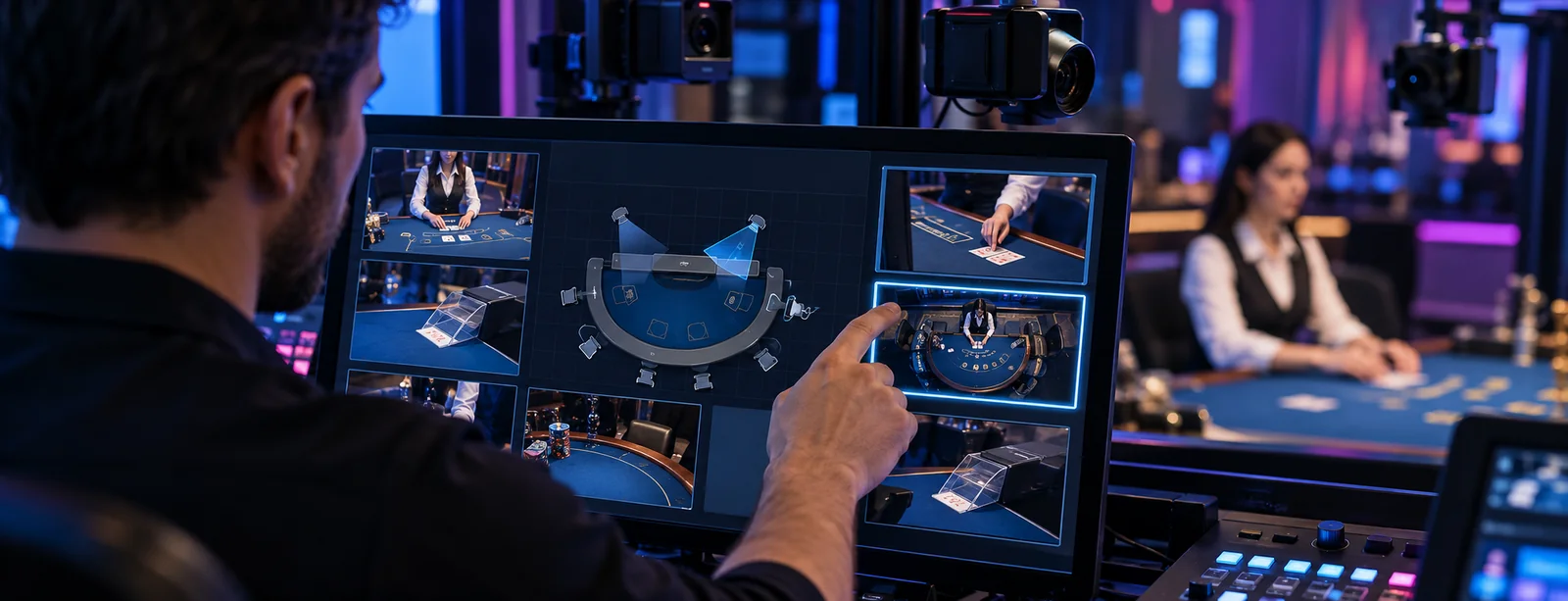
Measure observability, not just recognition
Track capture-to-alert time, stream availability, delayed frames, calibration faults, false alerts, review-queue age, manual corrections and evidence retrieval by table and camera. Accuracy can stay flat while a lens gets dirty or new felt changes contrast. The dashboard should show model output alongside the inputs that influence it.
Live studio operating measures
- Time-synchronisation drift
- Why it helps:Shows whether video and game events can be compared.· Review prompt:Did any affected rounds continue without a synchronised record?
- Event review age
- Why it helps:Shows how long a flagged sequence remains unresolved.· Review prompt:Does the queue need a staffing or threshold change?
- False and missed alerts
- Why it helps:Separates over-alerting from failure to surface expected exceptions.· Review prompt:Which camera, table condition or event type drives the error?
- Evidence retrieval time
- Why it helps:Measures whether a reviewer can reconstruct a specific event.· Review prompt:Can the original frames, model version and game log be found together?
- Stream recovery time
- Why it helps:Shows whether a technical interruption becomes visible and resolved.· Review prompt:Did the customer view show a stale state during recovery?
Studio deployment review
Before launch, exercise glare, dim rooms, hands over cards, edge-of-frame cards, frozen video, delayed audio, clock drift, camera restart and model outage. Verify that degradation is visible and table procedures remain safe. Ask a reviewer to reconstruct a round using only evidence available in an real-world review.
At handover, let a supervisor reopen a flagged event by round ID, camera time and model version. They should compare clip and game record without searching a separate archive or treating the alert itself as the outcome.