
Immersion changes where safeguards have to appear
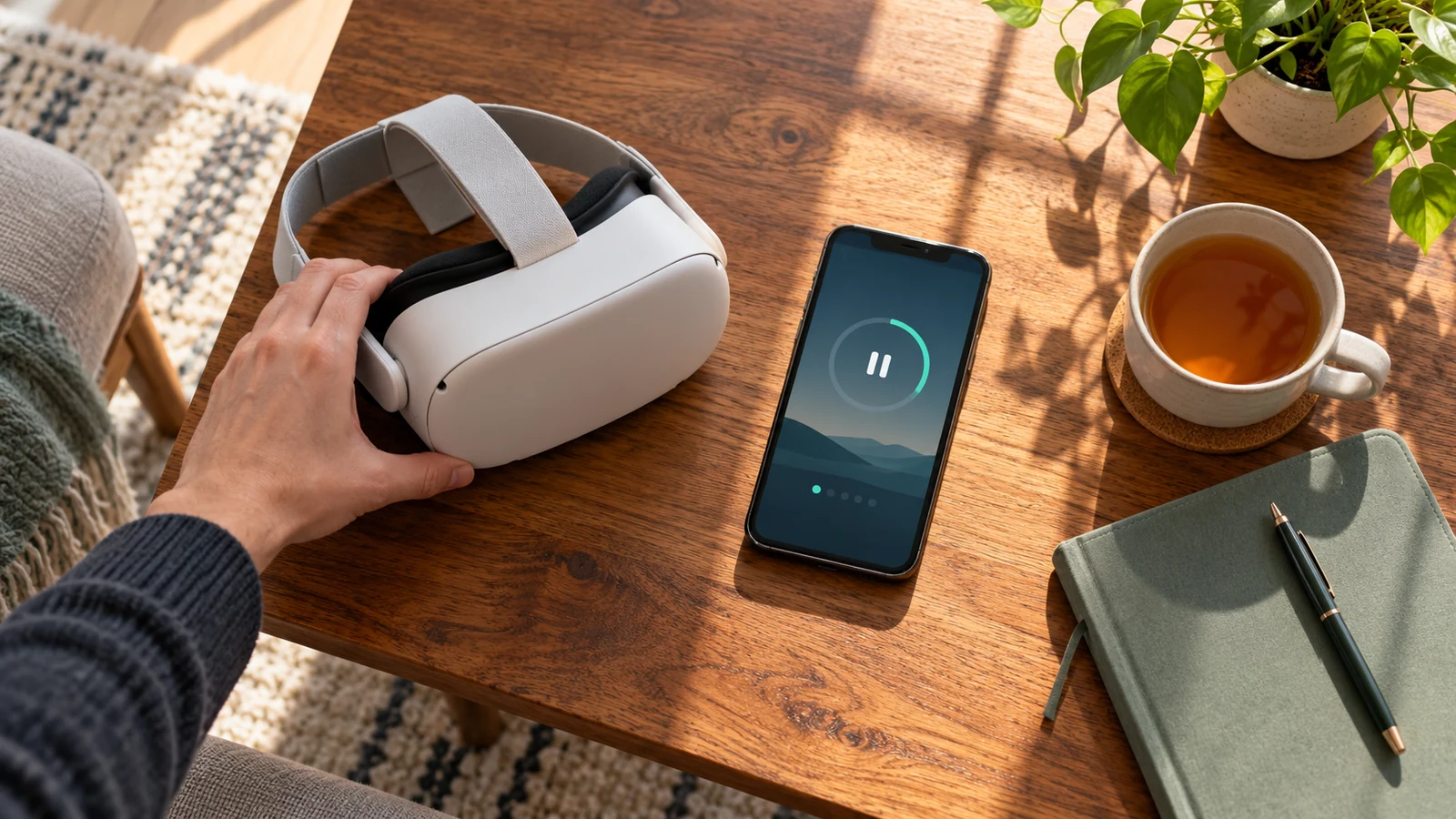
Removing a headset may leave a session, account timer or round active. The platform still needs to resolve state even when the player has left the virtual room. Put safeguards at account level and provide clear in-client routes to limits, breaks, support and exit.
Gambling harm affects public health in New Zealand. Roughly one in five people experience it in their lifetime through their own gambling or someone else's. That population estimate does not evaluate one product or predict an individual. The national plan covers prevention, early help, services and evaluation.
An interface cannot guarantee no harm. It can expose controls, remove avoidable obstacles, keep facts accurate and avoid encouraging continuous play.
Make limits visible before a game starts
Keep time, deposit and spend limits reachable from lobby, game and account. Show amount, period, use and reset in readable text. Explain whether each applies to one game, brand or linked devices. Enforce at account level across headset, browser and phone.
New Zealand's 2026 minimum standards require easy post-opening access to limits and a free-text setting. Where periods overlap, the lowest limit applies. Raising or removing a limit carries at least 24 hours' delay, enforced by the platform service rather than local VR.
At the limit, block the next wager on the service. State which threshold was reached, its reset and where settings are. Do not offer an override, fresh account or alternate game that evades the account restriction.
Breaks and time-outs must survive the headset
A headset can make a break feel like leaving friends. Keep time-out in a fixed menu without requiring walking, gaze or voice. Explain duration and game effect. A break should pause the interaction, not route the user into another betting area.
DIA standards require breaks, time-outs and alerts, and a waiting period for certain reductions in protection, such as shorter breaks or less frequent alerts. Apply the delay through the account service so it persists if the headset disconnects.
Show time in full-screen headset modes that hide the device clock, as DIA standards require. Let users resize and place it; do not hide the timer in a panel lost when they turn.
Use deliberate starts and predictable game pacing
A hand may remain pinched or a trigger held, so require a new action for each round. While one is pending, show the next control unavailable. Ending an animation cannot launch play, and gaze alone cannot submit a consequential wager.
The 2026 standards set a minimum 2.5 seconds between a round starting and the next becoming available. They require a separate deliberate action, prohibit auto-start and disallow platform designs facilitating simultaneous slots. Preserve these conditions when input switches from controller to hand tracking.
Display states such as ready, submitted, active, settling, settled and interrupted. Do not label a wager submitted until the service accepts it. After disconnection, query current state before enabling another start.
Protect self-exclusion and account access across modes
Self-exclusion belongs to the account, not a headset installation. DIA requires an accurate register and checks at activation and login. Prevent excluded accounts from play; a new avatar, device, store account or browser profile cannot create a second route.
Make live support reachable in the room through text as well as voice, without requiring headset removal. Staff need round ID and account status, not unrestricted access to unrelated sensor data.
DIA's player information page lists local support and account guidance. Place relevant information in a stable help area that remains available during pause or account restriction.
Design social rooms so taking a break stays private
Keep time-outs, limits and self-exclusion private from other participants. Do not show public balances or reasons for restriction. Let people mute, leave or hide avatars without losing settled results, and do not prompt immediate return after a break.
Countdowns, rankings and team challenges can pressure social play. Separate them from money, and do not reward session length, deposits or losses with status. Provide a non-wager social route and an exit without restart prompts.
Keep settings and support available in 2D. Players may prefer a phone after removing the headset; account state and limits must match.
Measure the controls, not the play volume
Responsible-play verification measures
- Limit access
- Measure:Time to locate and complete a limit setting.· Safety check:Lower limit enforced immediately; increase wait applied server-side.
- Break access
- Measure:Time to start a break from game and lobby.· Safety check:No wager accepted during a time-out.
- Time display
- Measure:Visibility by headset mode and panel scale.· Safety check:Clock remains visible in full-screen play.
- Self-exclusion
- Measure:Account check success across clients.· Safety check:No route through another device or avatar.
- Recovery
- Measure:Correct state after disconnect or headset sleep.· Safety check:No duplicate wager or lost exclusion state.
Do not treat longer VR sessions or more rounds as success. Measure access to limits, honoured time-outs, support response and prevention of accidental actions. Track duplicate rounds, missed alerts and bypass attempts.
Keep game input available while ensuring gestures cannot remove the deliberate start rule. Limits and pauses should apply through account services even if the scene continues animating.

Use a support path that does not depend on play
Support must open when play is paused, limits are reached or self-exclusion is active. Do not require an active bet to reach help. Provide text outside VR, including an ordinary browser path if the scene fails.
Place support in the stable system menu and keep it available after timeout, restriction or disconnect. It should open without returning to wagering; test with the game service unavailable.
Do not use support contacts to build promotional audiences. Limit access, set retention and use those records only for the stated help purpose.
Test safety controls through real interruption scenarios
Test a complete sequence: reach a limit mid-round, remove the headset, move to mobile and return after time-out. Verify persistence, correct timer and no automatic restart. Repeat with controller loss, browser reload and delayed service response.
- Trigger the limit while a round is active.
- Remove the headset and return after a time-out.
- Confirm that self-exclusion blocks entry on every supported device.
Review logs with support staff to confirm alerts, settings changes and blocked actions. Do not retain extra camera or audio when account events already prove enforcement.
Set release blockers for missing safeguards, unresolved settlement or repeated bypass. Name who may pause immersion while keeping account services available.