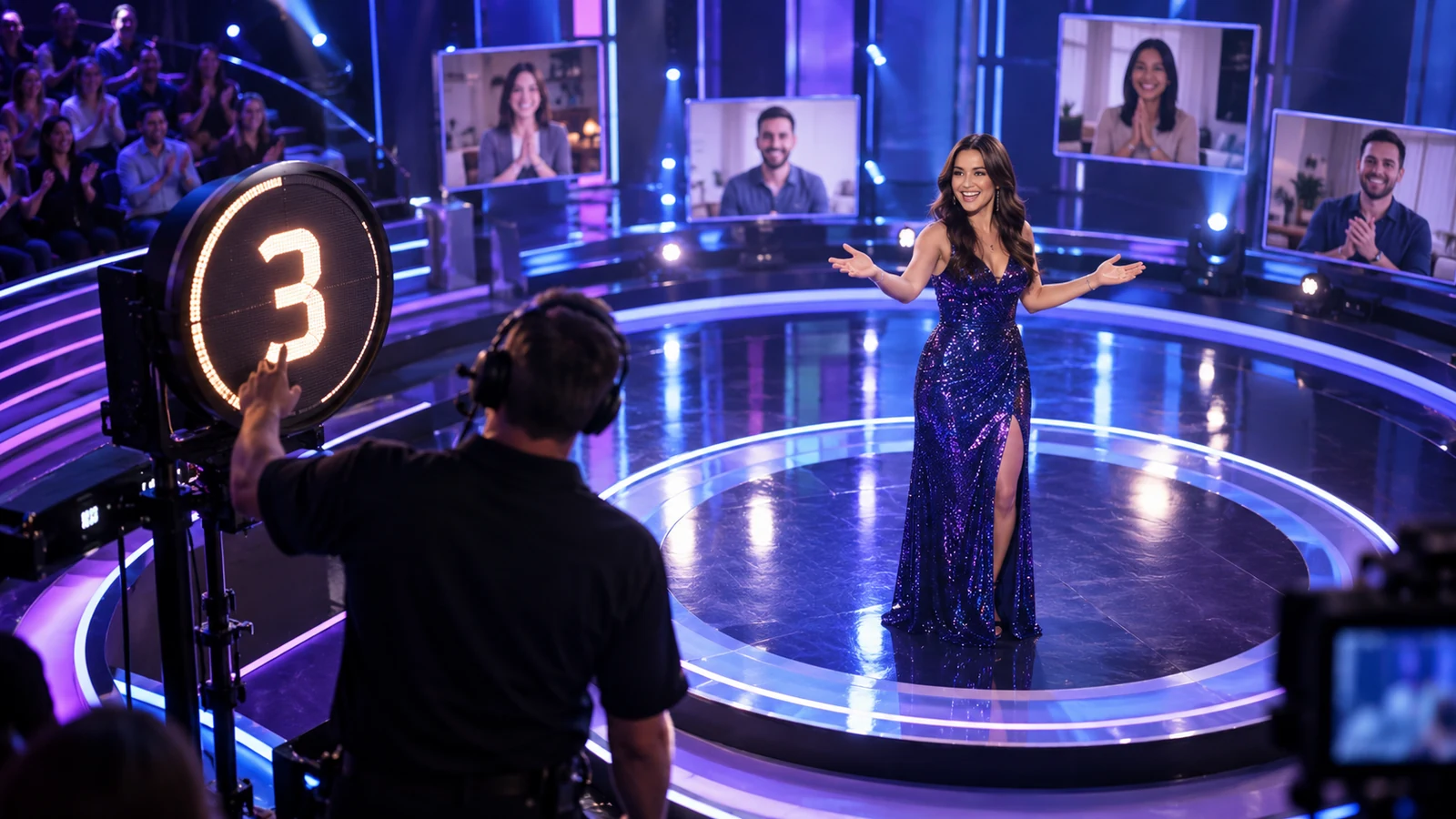
A game show has three systems to keep in sync
A host reveals a result while the countdown remains on screen. If the service has closed the action window, the interface must stop suggesting that an input can still be accepted. Align presenter, stream, rules and controls to one event timeline so show pacing never replaces game state.
Separate entertainment interaction from wagering. Voting on a host's next answer is not a bet; selecting a wager or entering an amount is. Label each step and show the stake before service acceptance.
Do not rely on host speech or gestures alone to explain rules. Players may mute, use captions, join late or see a delayed stream. Show phase, rules, odds and status in text so the flow makes sense without voice or avatars.
Define event timing before writing the script
Map each show event-lobby, rules, host explanation, betting open and close, outcome, result and next round-to an official timestamp. Video may lag and network conditions vary between viewers.
Game show event and interface responsibility
- Rules displayed
- Service responsibility:Serve the rules and odds for the current version.· Host or UI cue:Stable text panel with accessible captions.
- Betting opens
- Service responsibility:Accept valid actions inside the configured window.· Host or UI cue:Visible opening state and amount confirmation.
- Betting closes
- Service responsibility:Reject later actions and record the close time.· Host or UI cue:Text state; do not rely solely on a host gesture.
- Result settles
- Service responsibility:Write the official outcome and account event.· Host or UI cue:Result label, net position and balance update.
- Next round Enables
- Service responsibility:Apply timing and deliberate-action rules.· Host or UI cue:Fresh control becomes available after the required interval.
Use service time, not the video frame, to govern decisions. After a production fault, pause the show, display game status and reject uncertain actions.
Make audience participation fair and legible
Publish eligibility, timing and tie rules for audience votes. Explain whether a vote affects entertainment, game setup or the wager result. If odds and outcome are unchanged, say so; if game state changes, record inputs, close time and rule version for reconstruction.
Show whether a response is private or shared. Polls may report totals but must not expose individual stakes or accounts. Host reactions cannot change odds or acceptance windows. Use the same event logic on desktop, mobile and headset.
Define correction for missed or duplicate input. A retry with the same request ID should count once. If a player disconnects near close, state whether the service accepted the action instead of leaving the vote control frozen.

Host design should not depend on pressure
Hosting can make rules accessible, but urgency, public praise and emotional reactions can also press players into another round. Keep language consistent with published terms, avoid suggesting that a win is due or guaranteed and do not shame anyone for sitting out or pausing.
Keep losses, balances and betting patterns private. Avoid rankings based on money spent or session length. Let social participation concern the show, not public financial risk; provide mute, report and exit without blocking account settings.
Review both script and system. A host might say last chance while the timer extends; a graphic might show bets closed while the backend still accepts them. Recorded show, game log and interface status must agree.
Accessibility for live and interactive segments
Caption speech, label meaningful sounds and keep the current phase visible. Allow enough reading and response time. Keep focus consistent across keyboard, touch and controller. Never rely on flashing, colour alone or quick head movement to convey a result.
In headset mode, include seated use and a stable panel. Players should be able to mute spatial sound and read captions without losing instructions. Preserve rules, controls and support in flat mode, including for users who refuse microphone, camera or avatar access.
WCAG 2.2 gives testable web criteria, but it does not establish comfort or accessibility in a spatial show. Test captions, keyboard-only input, reduced motion, screen readers and the target headset with users.
New Zealand online casino controls apply to the show
Suspense may be part of the script, but the betting window needs explicit start and close events. Neither a host countdown nor poll or reveal may begin the next round. Show rules and reject actions after service close.
Classify screens by the actions they enable, not by the studio set. The format can mix entertainment, audience input and gambling. Review host script, rules version, wager flow and promotions together.
A script can create urgency without changing rules. Review countdowns, repeated prompts and audience reactions against decision time, and let hosts pause when service is unavailable. After format changes, track invalid entries and confusion reports rather than treating crowd energy as success.

Production checklist for a new show format
- Publish game rules, odds, bet window and outcome logic before the first wager.
- Use one authoritative event clock for actions and settlement.
- Test simultaneous audience inputs, late joiners and duplicate requests.
- Keep game-state labels in text even when the host explains them aloud.
- Verify limits, breaks, time display and self-exclusion on headset and browser.
- Record stream delay, close timestamps, rule version and round event IDs.
- Test captions, audio-off, reduced motion and leaving the show mid-round.
Track accepted-input accuracy, close-time disagreements, duplicates, stream delay, comprehension and Inspection of breaks. Repeat participation or wager volume alone cannot establish that a show format works.
Keep votes and host timing in the entertainment layer, apart from camera sync and movement input. This shows what affected the outcome and what remained presentation.
Plan a fail-safe for a live production fault
If power, camera, sound, network or host fails during a round, the control room needs a pause that blocks new input and explains the issue remotely. Retain the last accepted action and close time so play can resume or resolve under published rules.
Separate game events from the video switcher. A camera cut or host cue cannot open or close betting. An authorised workflow must send the game-service command and log operator, time and round ID.
After restart, compare the script, recording, game log and customer view. Send conflicts to a named reviewer before the next round.
Make show rules versioned and testable
Version round rules, close time, prize table, tie-break and bonus. Display that version before action and store its ID with accepted input. Later edits must not alter terms of a round already running.
Run a tabletop drill with production, compliance, support and engineering. Include delayed video, duplicate requests, host corrections, a game lock and a player break. Record expected states and who signs off exceptions.
After a host correction, compare spoken script, rules version, event ID and player result. Identify the service state governing the round and retain it even if the broadcast is edited or replayed.